

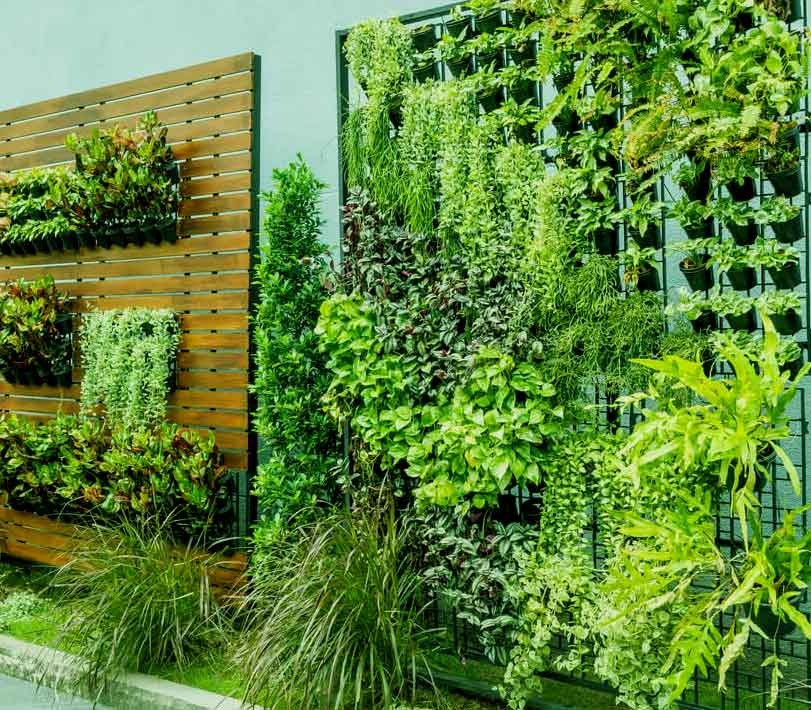
Many people are drawn to vertical gardening because it adds visual interest and structure to the garden. It also increases the amount of food you can grow in a small space. But if you’re thinking about making your garden more vertical, you need to make sure the structure is sturdy enough to hold your plants and provide adequate support.
The best way to do this is by using a trellis, a type of support that lifts vining crops up and out of the way, freeing up space at ground level for other vegetables or herbs. Trellises also improve the airflow around the leaves, flowers, and fruit. This makes it easier to keep the plants healthy and ward off pests, disease, and fungal diseases that can spread quickly in overcrowded gardens.
If you don’t have a lot of space, trellises are ideal for growing large vegetables like cucumbers or pole beans. They allow them to sprawl over the entire width of a raised bed without crowding out smaller vegetables in front or behind them. They can also be used to grow smaller crops, such as peas and basil, at the back of a bed where they’ll get plenty of sun.
Arch trellises are another great option for creating a more vertical vegetable garden. They create a natural walkway through the center of a raised garden bed and look gorgeous when the vines are draped across them with ripe produce hanging down like ornaments. They also make harvesting easy, so you can skip the bending and crawling on the ground to grab your veggies.
Another benefit of a vertical garden is that it helps to improve the overall health of your vegetables. The increased sunlight and airflow prevents overcrowding and promotes a healthier root system, so your vegetables will be more resistant to disease. It’s important to remember, however, that even with a trellis, you should still plant your vegetables in an area that gets plenty of sunlight and protect them from wind and weather.
To help ensure your vertical garden thrives, use a good quality soil mixture that’s suitable for container gardening. Add perlite or vermiculite to the mix to improve aeration and water retention. You should also consider adding a drip irrigation system to your plantings, as this will reduce the frequency of manual watering and help maintain consistent moisture levels throughout the season.
Shiv Shankarlandscape is very Professional in this field,

Leave a Reply