

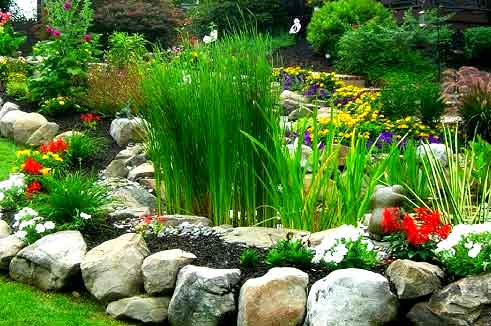
Create a rock garden in your landscape by pairing rugged boulders with low-growing plants. Choose species that thrive in rocky conditions, such as sedums and dwarf conifers.
Re-create a natural mountain slope with rocks and alpine plants. In this front yard, a mix of shrubs, perennials and flowers accentuates the cliff-like rocks.
Natural Stone Outcroppings
Rock garden ideas with plants often feature a natural stone outcropping. This type of landscape element adds a touch of drama to any yard while also serving as a unique backdrop for plantings. When selecting stone for your outcropping, aim to mimic the geological formations that are native to your area. The largest stones should serve as anchors, and smaller rocks should fill in gaps to create a realistic appearance.
A haphazard pile of rounded stones will only look artificial. Instead, choose angular rocks that are similar in color and texture. The first boulders should be set very deeply into the ground to ensure stability and help prevent shifting with rain and wind.
Complement natural stone outcroppings with drought-resistant perennials such as sedum and sempervivum. These and other drought-tolerant plant varieties grow well in the crevices around stone outcroppings, enhancing their organic beauty. Strategic lighting can also dramatically transform your rock garden after dark. It casts dramatic shadows to enhance the outcropping’s natural texture while adding a warm, inviting ambiance to your backyard.
Low-Growers and Evergreens
Add color to rock gardens without extra watering with low-growing perennials and evergreen ground cover. Perennials with silvery or blue-green foliage like alyssum, candytuft and silvery lamium (Lamb’s Ears) contrast well with rocks in a variety of colors and textures. These tough-as-nails plants tolerate dry soil conditions and require minimal care.
For a more lush look, try low-growing spreaders such as creeping phlox , sedges and rushes and perennial sea thrift . Trailing ground covers like ivy and sedum can be tucked into crevices and between boulders, or allowed to cascade over a wall.
In frost-free regions, add the luster of soapwort to the landscape. This easy-care perennial produces a profusion of pink flowers that adds summer interest to dry areas, including rock gardens. Or, tuck clumps of blue fescue (Festuca glauca) into the landscape for a similar effect. These grasses are tolerant of dry soil and mix well with many types of rock garden plants.
Drought-Tolerant Plants
Tough drought tolerant plants are a staple in rock garden ideas. Sedum, also called stonecrop, stores water in its fleshy leaves and thrives during dry spells. Plant it in masses for a ground cover or allow trailing varieties to cascade down walls. It looks especially striking when used to edge sunny borders and landscape combinations.
Another rock garden favourite is agastache, or lavender scented flowering agave, which adds structure and dramatic color. The long blooming flowers attract butterflies and bees. It grows well in a wide range of conditions and can even be incorporated into meadow settings.
Hens and chicks are perennial succulents that are a perfect fit for rock gardens. These mat-forming plants form a central rosette with offshoots and come in a wide range of single and bicolor hues. They love lean, poor soil and can be used in rock garden beds, curbside strips and as edging. Creeping thyme, a low-growing ground cover, is another option for rock gardens. This herb produces small narrow leaves and pink or white flowers and thrives in hot, dry spots that would make other plants wither.
Dwarf Conifers
A few carefully selected dwarf conifers add structure and textural contrast to rock gardens year-round. They grow slowly and stay small, and can be used as focal points or background plants in landscapes from Traditional to Modern.
Hinoki cypress and Mugo pine are among the best evergreens for small spaces. They have dense shrubby growth with long slender needles and attractive tan new growth. They are shade tolerant, and their diminutive size fits into alpine rock garden plantings.
Arborvitae (Thuja occidentalis) also grows well in small spaces and is versatile as hedging or in mass in the landscape. ‘Danica’ is slow growing and has a symmetrical globe shape with finely textured foliage that turns blue-green in winter. Use it in a winter garden or in a combination of conifers and deciduous trees. A few specialty conifers, like weeping spruce or larch (Larix decidua), can add drama to a garden. These are generally more expensive than standard sizes of the same species.
Shiv Shankar Landscape best Landscape Company in Delhi more details you can get here : shivshankarlandscape.com

Leave a Reply