

Nitrogen (N) promotes green leafy growth and is an essential part of chlorophyll, amino acids, and enzymes. Deficiencies show as yellowing in older leaves.
Phosphorus promotes root and stem development. Deficiencies result in stunted plants and poor fruit development.
Magnesium aids phosphate metabolism and plant respiration and sets in motion several enzyme systems. Deficiencies show as yellowing between the veins in old leaves.
Soil
Soil is a complex blend of mineral materials and organic matter from decomposed plant residues. It contains a relatively high percentage of pore space and holds plant nutrients tightly bound to the soil particles. Soil nutrient availability depends on the soil pH, the type of minerals and the presence of organic matter.
Soils with a high proportion of clay and organic material have a greater capacity to hold cationic nutrients. These include nitrogen (N), phosphorus (P) and potassium (K). They are essential for plant growth. The plant’s roots draw these from the soil and a variety of signs indicate nutrient deficiencies.
For example, iron deficiency manifests as yellowing between the leaf veins, and manganese deficiency results in weak stem development. Soil testing is a key first step to correcting nutrient deficiencies. It allows for the selection of fertilizers with an immediate impact on crop nutrition. The next step is to build reservoirs of nutrients that can help maintain adequate levels.
Manure
Manure is an excellent source of both organic and inorganic nutrients for crops. It supplies a balance of nitrogen, phosphorus and potassium. In addition, it improves soil structure and increases water holding capacity.
The nutrient content of animal manure varies considerably from one livestock operation to another. The composition of the ration fed to livestock; method of waste collection and storage; and additives used all affect the final nutrient content of manure.
Nitrogen in manure must be mineralized (converted to inorganic form) by microbes before it can be used by plants. The proportion of organic N mineralized the first year after application varies with livestock species and the type of waste management system.
In open lots, 20-40% of the nitrogen may be lost in runoff and leaching. This loss could be reduced by using cover cropping and/or a runoff collection system. In liquid lagoons, 50-85% of the phosphorus and 80-90% of the potassium could be lost to leaching or settle to the bottom but are still available if agitated prior to land application. If possible, have the manure analyzed prior to application. This can be done from a stockpile by taking subsamples, or during hauling by collecting samples on the surface of the manure and in the core.
Compost
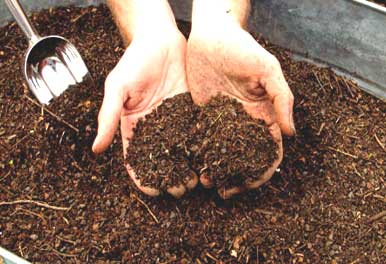
Any organic matter that decomposes, such as grass clippings, food scraps, leaves, manure and hay, is a source of nutrients for plants. The best way to increase their availability is by adding them to compost. Compost is a soil amendment and fertilizer that improves the quality of garden soil, reduces greenhouse gas emissions and helps grow healthy food.
A primary function of compost is carbon sequestration, a process that may also have long-term benefits for soil health1.
The nutrient composition of compost varies widely depending on the organic (carbon-based) materials used and the composting conditions. However, most types of compost contain substantial amounts of nitrogen (70%–100% of the total), phosphorus (5–20% of the total), potassium (up to 100% of the total) and sulphur (2–5% of the total). Micronutrients found in compost include iron (for chlorophyll production and photosynthesis), manganese, molybdenum, copper, zinc and boron. All are essential for plant growth. They work in tandem with water and carbon dioxide to drive photosynthesis, nutrient transfer, temperature regulation, plant hydration, protein formation and other physiological processes.
Fertilizer
A wide range of materials are used as fertilizers, including organic and synthetic options. The nutrient content of organic fertilizers is largely dependent on soil conditions and microorganism activity, and can be influenced by climate. Synthetic (chemical) fertilizers are more precisely engineered, and offer high nutrient concentrations with immediate availability.
The three primary plant nutrients are nitrogen, phosphorus and potassium. Nitrogen fuels leafy green growth, stimulates flowering and fruit production and helps plants build strong roots and stems. Phosphorus helps transfer energy from sunlight to plant cells, stimulates root and seed growth and hastens maturation. Potassium increases a plant’s disease resistance and helps form and move starches, sugars and oils.
Other essential nutrients include calcium, magnesium and sulfur. These are known as secondary or minor nutrients, and are required in small amounts compared to the primary macro-nutrients. These nutrients are found in many foods, and are also present in manure and compost. The remaining five nutrients are considered micro-nutrients, and are required in extremely small amounts compared to the primary macro-nutrients.

Leave a Reply